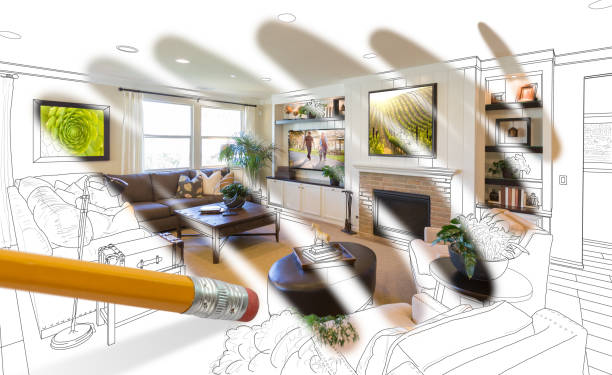
You know how some rooms just feel “off,” even when everything looks fine on paper? That’s because our brains notice tiny details way more than we realize. Small design tweaks are like magic dust for your space—they don’t cost a fortune, but they can make a room feel completely different, even brand new. I’ve lived this experiment firsthand, mostly because my apartment used to feel like a sad dorm room, and now… well, it doesn’t.
Lighting is the easiest and most underrated tweak. Switching out harsh fluorescent bulbs for warm LEDs can make a room feel cozy instead of sterile. Add a lamp in a corner you usually ignore, and suddenly that dark spot doesn’t feel like a cave anymore. I did this in my study last year, just one small lamp, and I swear my productivity went up. Not that I became a genius overnight, but at least I stopped staring at blank Word documents in despair.
Another huge difference comes from textiles. Throw pillows, rugs, even curtains—small changes here add texture and warmth. A rug doesn’t need to cover the whole floor; even a corner rug under a chair or coffee table can anchor a space. I bought a cheap patterned rug for my living room and suddenly it didn’t feel like a bland box anymore. People on Pinterest go crazy for these kinds of tweaks, but honestly, it works.
Furniture placement counts more than most people realize. Moving a couch two feet to the left, angling a chair slightly, or clearing clutter from a corner can open up flow and make a room feel twice as big. I spent months thinking I needed a new sofa, when really, I just needed to nudge it a bit and remove a random pile of junk behind it. Boom—room transformed, zero money spent.
Even tiny decor items make a big impact. Plants, wall art, candles, a mirror—small accents like these trick your brain into thinking the room is intentional and cared for. I added a single hanging plant above my desk, and for some reason, I started actually enjoying sitting there instead of just staring at my laptop scrolling memes.
Color tweaks, even minor ones, change mood instantly. Swapping out dark, heavy pillows for lighter tones, or adding a throw with a pop of color, gives a room personality. You don’t have to repaint walls; small pops of color through accessories can make a room feel bright and fresh. My friend did this with her bedroom by just switching pillow covers and adding a yellow lamp, and it felt like a whole new room—without repainting, without dust, without stress.
Mirrors are also underrated. Adding one strategically can reflect light, open up space, and make a room feel larger. I placed a simple mirror across from a window, and suddenly my tiny apartment didn’t feel so… tiny anymore. Social media is full of before-and-after photos of this trick, and they’re not lying—it’s shocking how much space perception changes.
Even something as small as replacing doorknobs, cabinet handles, or switch plates can add polish. It’s subtle, but when everything is updated, the room suddenly feels intentional rather than just “thrown together.” I did this with my kitchen last month, and friends actually commented, “Wow, did you remodel?” Nope. Just new handles and a little elbow grease.
Finally, clutter management is a game changer. Removing junk, organizing surfaces, and keeping things visually simple can make a room feel completely fresh. Small containers, trays, or baskets make a difference; suddenly your coffee table doesn’t scream chaos. I honestly thought I needed new furniture to fix my living room, but just decluttering and organizing made it look better than I imagined.
In short, small tweaks—lighting, textiles, furniture placement, decor accents, pops of color, mirrors, hardware, and decluttering—combine like little dominoes. Each change seems minor, but together, they totally transform a space. It’s like your room was stuck in low definition, and these tweaks turn it HD. You don’t need a complete overhaul, just an eye for small improvements, and suddenly, your room feels like a new place you actually enjoy being in.